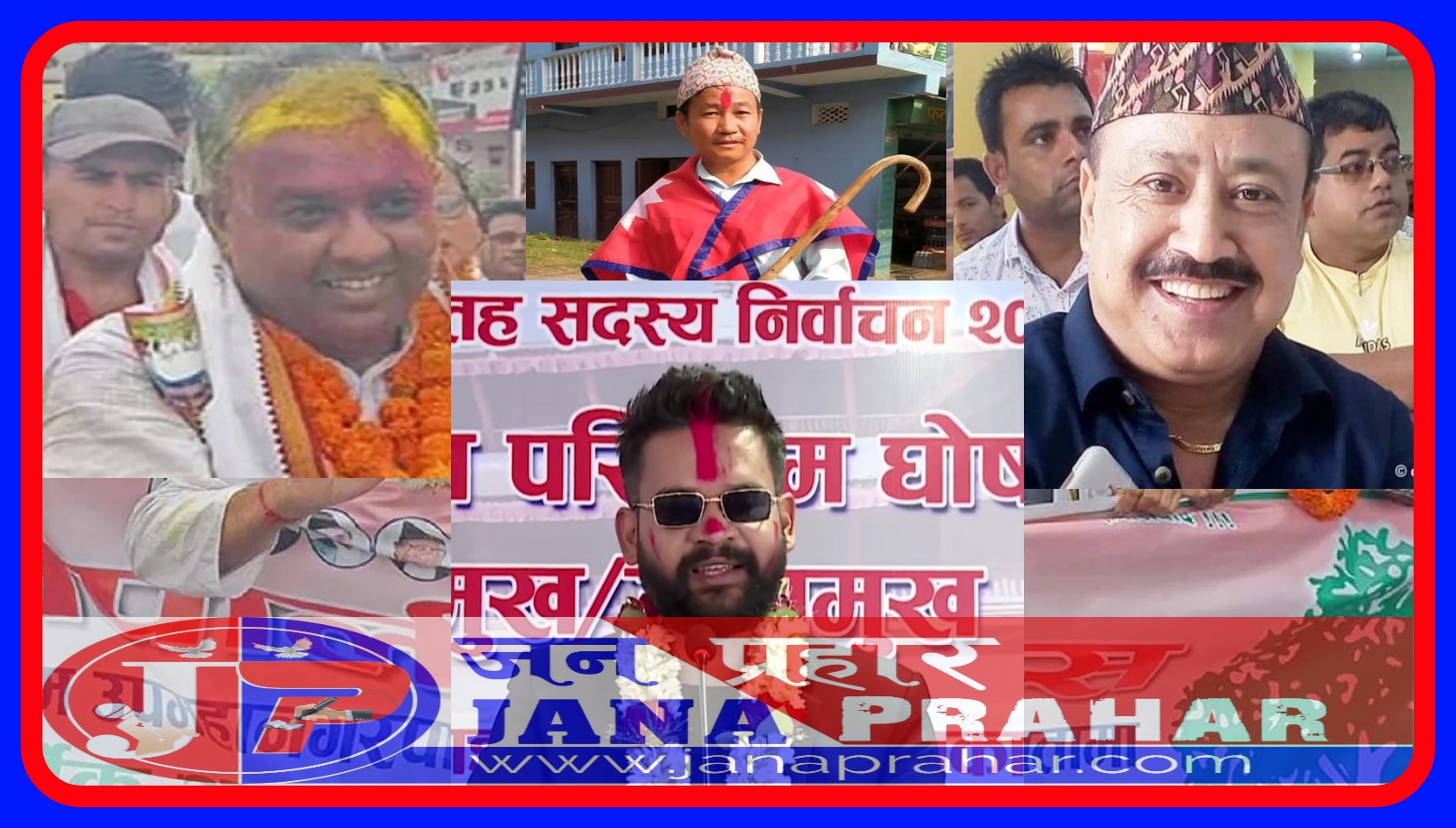
There is no harm in democracy from Hark and Balen. Voters are not slaves of party system. His victory reaffirms the real power of sovereignty inherent in the electorate. This is a great contribution of Balen and Hark to democracy.
The recently concluded Second Local Election of the Federal Democratic Republic of Nepal-2079 BS made an invaluable contribution to the continuity of the democratic system and the institutional development process, as well as many other aspects and dimensions to be discussed. One of them is the remarkable intervention, role and victory of independent candidates.
A total of 385 independent candidates including 13 Palika Chiefs / Chairpersons, 4 Palika Deputy Chiefs / Vice-Chairpersons and 136 Ward Chairpersons have won the election from the battlefield. In proportion to the overall result, this is not a very large amount, only about 1 percent. However, in a party democracy with a parliamentary system, such an election result is seldom expected. This had not happened in the previous local elections.
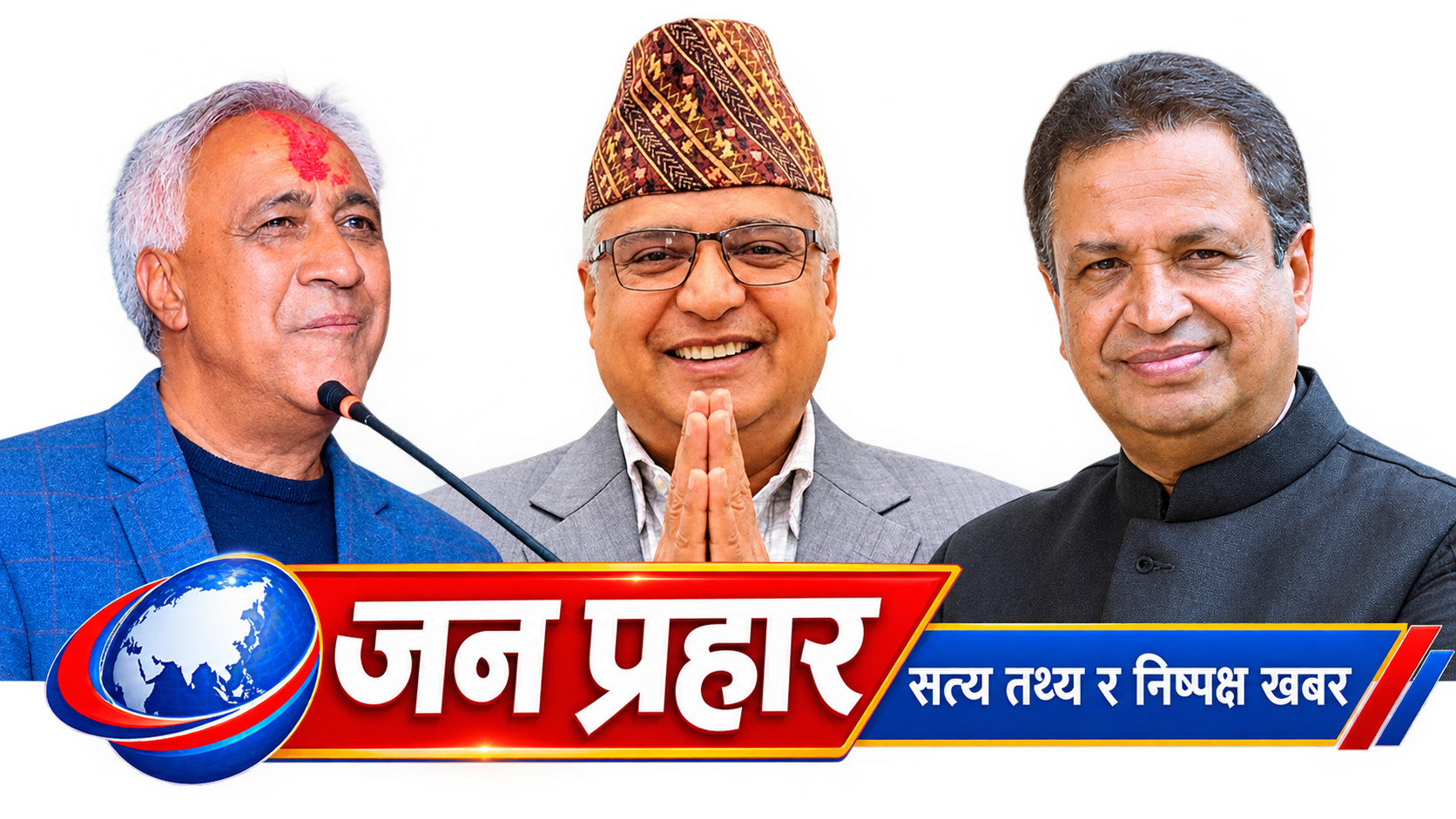
The victory of Balen Sah in Kathmandu, Harkaraj Sampang Rai in Dharan and Gopal Hamal in Dhangadhi for the post of mayor was the talk of the town. These results were unexpected and surprising for many. Many expected these candidates to win significant votes, but few believed that they would be able to defeat the candidates of the Nepali Congress and the CPN (UML), which have such a large organizational network, resources and traditional vote bank.
It was understood that voters were dissatisfied and angry with the old party, the working style of its top leaders and the party candidates who were given tickets in the election. In a democracy, party system, factionalism, factionalism, nepotism, nepotism, nepotism, nepotism, nepotism, nepotism, nepotism, nepotism, nepotism, nepotism, nepotism, nepotism, nepotism, nepotism.
Not only the old parties like the Congress, the Communists and the RPP, but also the so-called ‘new’ or ‘alternative’ discretionary parties had sufficient grounds and clear reasons for voters to be dissatisfied. In the previous local elections, they could not win in Kathmandu Valley but the discriminating and common candidates got good votes. Although the two parties became a common denominator, their popularity and credibility plummeted due to repeated rifts. The ‘Madhesh-centric’ image of parties like Jaspa, Lopsa and Janmat remained intact.
At the time, voters had limited options. One of those options was to choose an independent candidate. The disillusionment with the traditional parties, the fierce presentation of the so-called new and alternative parties, and the limited number of party candidates due to the five-party alliance created a conducive environment for independent candidates. New, special or special events in history are expressed through a beautiful combination of regularity and contingency. This time the side of independent candidates was such a natural combination. Although it was an ‘undercurrent’, not everyone was aware of it.
Not all independent candidates were of the same type and nature. The independent candidates were the ‘rebels’ of the party. For example, Manoj Sah of Janakpur and Prahlad Kumar Chhetri of Mahottari Bardibas are the rebel candidates of the Nepali Congress who won. There were also independents associated with some ‘rebellious campaigns’ like Ganes Poudel of Pokhara. Independent candidates associated with the rebellious campaign did not do well. Some of the losing rebel candidates also got respectable votes like Jagannath Poudel, a rebel Congressman from Bharatpur and Umesh Yadav, a Jaspa rebel from Biratnagar.
Municipalities and wards of the Federal Democratic Republic are not like yesterday’s panchayats or VDCs. In many ways they are different and powerful state organs. After the restructuring of the municipality concept, their area, population and voter size have become very large. Today’s wards are like yesterday’s VDCs. In this sense, the victory of the independents in the ward chairpersons is also a big event. Given that some of the country’s top leaders have not been able to win their party’s ward chair in their own wards, the fact that an independent candidate has won in 136 wards is a big deal.
Now the question arises, why did this happen? Why or how can an independent candidate dominate and be effective in a party democracy? There is no need to worry too much, there are dozens of reasons why it is easy to see. The last five years have seen a rise in partisan tensions, rifts, conflicts, inferiority complex among top leaders, and the erosion of democratic values and institutions.
At the heart of this trend were the communist elements, but all parties had to bear the brunt of it. The CPN (Maoist), which had won a two-thirds majority under the slogan of communist unity and political stability, split into three. These three groups came up against each other in such a way that the illusion was created that the parties were the carriers of inferior gossip. There are still dozens of communist groups in the country, cursing each other daily.
However, this was not the only problem of the communist elements. Kamal Thapa, who was defeated in the General Convention, left RPP and started a new RPP, Nepal. Thapa, who vowed never to split the party by touching the Gita, made the oath meaningless. This made the people think that political leaders are a bunch of greedy and selfish people who can’t live without a position. The repeated unity and division of discriminative sharing, action and exclusion cases proved to be a farce without a ticket being displayed on the sidewalk. The Samajwadi Party and the Rashtriya Janata Party, which had formed a coalition, had split less than a year ago. From these incidents, the proverb ‘Whoever comes with a torn ear’ became even more popular.
This time, the Nepali Congress was more united and secure than other parties. The practice of inter-party democracy at the 14th Congress General Convention and the emergence of new leaders had raised some hopes. The Congress benefited from the split of all other parties and the slight improvement in the democratic image of the Congress. Due to this advantage, the Congress became the first party to win many seats.
However, if we look at the popular vote ratio, it cannot be said that the Congress has made much progress. As the Nepali Congress is the leading party in the five-party alliance, it did not field its candidates in all the 753 municipalities. Therefore, the actual counting of the popular vote of the Congress does not seem possible. However, in indirect estimates and analysis, the popular vote of the Congress should be between 30-40 percent this time as well, which is the proportion that the party has traditionally been occupying.
Whether traditional or new – disgust with the parties, their leaders and working style was the ‘pushing factor’ of independent candidates’ victory. The other ‘pulling factor’ was the new generation of voters, their expectations, their dreams and their ‘virtual world’.
The role and influence of social media like Facebook, Twitter, TV talk show, channel like YouTube is not given much importance by the previous generation. According to a statistic, there are more than 12 million Facebook users in Nepal now. The influence of so-called traditional mainstream print journalism and information sources is steadily declining. In a few years, the chances of her dying will increase. The number of viewers watching the program sitting in front of the TV set has decreased. The number of users of YouTube channels has increased. There are modern mobile phones in the hands of people who can use the net facility.
If we had elected the President of the Union and the Head of the State by direct vote of the people, then perhaps we would not have had to endure the artless, incompetent and lustful alternate rule of KP Sharma Oli and Sher Bahadur Deuba for the last five years. There would be no political instability at the state level. Many Balens and Harkaras could also emerge in the Union and the states.
The virtual world it has created is not only huge, it is constantly growing and expanding. It is getting worse. It contributed greatly to the rise of Balen Sah and Hark Sampang.
Yesterday was an era – fighting for democracy, republic, federalism, inclusion and social justice was a matter of great heroism and strength. Joining the party, organizing, marching and going to jail was considered a positive ‘track record’ of a politician. Until the Maoist People’s War, the appeal and appeal of the ‘rural class struggle’ was strong.
Nearly two decades have passed since the Jana Andolan 2062/63. In the meantime, a large line of new voters has been formed who have completed 18 years of age, who have neither experienced autocracy, nor monarchy, nor deep experience of social discrimination, nor the misery of rural life. The parties failed to paint a clear picture of the psychology of voters who grew up in private and residential schools, made going abroad their first destination of life, and enjoyed the virtual world rather than social interaction.
Nor did the parties create a mechanism to understand and address their feelings, desires, aspirations and dreams. This generation was very different from the traditional and so-called mainstream generation of national politics.
Attempts to interact with this generation have been dubbed by some as ‘Facebook’ and ‘YouTube’, as if using Facebook and YouTube is a low-level job. The ‘Facebook generation’ has contributed to the development of new political trends not only in Nepal but in many countries of the world. The Arab Spring, which began in Tunisia almost a decade ago, was a marvel of social media. It is believed that sponsored use of social media was one of the factors behind the rise of BJP and Narendra Modi in India after 2014. In the 2016 and 2020 US presidential elections, the use of Twitter, other social networking sites and the Internet was high priority and controversial.
Debate has also begun over whether the victory of independent candidates in the local elections poses a threat to democracy. Before entering into this debate, the question of the form of government and the electoral system is also drawn. We have adopted parliamentary system in the Union and the states. Voters are not allowed to elect the President, Prime Minister and Chief Ministers by direct voting. There is a gap between the expectations of the voters and our constitutional system. New voters want to choose their own ruler. The new generation is not convinced of the voting system without knowing who will win tomorrow and who will rule over them.
So; The election of Chief / Chairman, Deputy Chief / Vice-Chairman, Ward Chairman and members will be done by the voters themselves through direct voting. The electoral system adopted by our constitution for the Union and the states is the parliamentary electoral system, but the electoral system adopted for the local level is not parliamentary but direct election system. This time the voters felt the difference between the parliamentary and direct election system. With this election, the people’s aspiration to change the parliamentary system in the states and the federation seems to have increased even more.
The rise of Balen Sah, Hark Sampang and Gopal Hamal would not have been possible if the parliamentary system had been adopted at the local level as well as at the federal and central levels. This is the difference between parliamentary and direct democracy: in parliamentary democracy, people like Gagan Thapa cannot be prime minister at the same age. But while direct democracy makes the rise of Balen Sah and Hark Sampang easy and possible, the debate over this difference must now take place from house to house. Otherwise, it is Sher Bahadur Deuba who will come again after the November election. This is not the will of the people / voters but the fault of the system.
The victory of independent candidates in the direct election system does not do any harm to democracy, but democracy becomes stronger and more capable. Balen and Hark are the beauty of our democracy, a special kind of flower and fragrance. Their victory will not weaken democracy, it will make it more prosperous. Our constitution, law and system have not barred or barred independent candidates. Therefore, there is no harm to democracy from them. He acknowledged that voters were not slaves to partisanship, a risk that would increase the risk of institutionalization. His victory reaffirms the real power of sovereignty inherent in the electorate. This is a great contribution of Balen and Hark to democracy.
If the parties become irrelevant and incompetent, a new party can be formed, but if we continue to promote non-partisanship on this or that pretext, it will be another extremism.
The argument that they can’t reduce it because they don’t come on a party basis, they fail quickly is not true. If they fail, they will fail because of their own incompetence and incompetence, not because they do not have a party candidate. The ward chairperson and the municipal council have no political, legal or moral authority or capacity to thwart him. Because when the mayor fails, the ward chairman and the municipal council do not succeed. He must have a kind of artistic cooperation, behavior and agreement with the ward chairman and the municipal council. Do not try to walk and walk alone. However, direct democracy does not allow those who have won on a party basis to defeat the mayor in a planned and sponsored manner.
If we had conducted the election of the President of the Union and the Head of the State by direct vote of the people in the same way, then perhaps we would not have had to endure the artless, worthless and lustful alternate rule of KP Sharma Oli and Sher Bahadur Deuba for the last five years. There would be no political instability at the state level. Many Balens and Harkaras could also emerge in the Union and the states. They could come from both sides and from outside.
However, it is important to understand that the current constitution and system could be in jeopardy if the parliamentary elections continue to be flooded with independents.
Why and how Assuming there is a majority of independent MPs in the federal parliament, how can a parliamentary party be formed? Who is the Prime Minister? How will the cabinet be formed? Where is the institutional process of public accountability? Where will the political instability increase? How many independent MPs can the Prime Minister fulfill the expectation of becoming a Minister? What level of political and moral crisis will the Prime Minister face after the flood of MPs withdrawing their support in the rush to become a minister?
There is no need to analyze much, parliamentary democracy cannot function if a large number of independents win. The current system is at risk from independents here.
However, there is another side to understand: the risk to the parliamentary system is not the risk to democracy. Democracy is one thing and parliamentary system is another. Democracy is a broad, everlasting and omnipresent world spirit while the parliamentary system is just one of them. The failure of the parliamentary system is considered the failure of the parliamentary system, not the failure of democracy. If the parliamentary system fails due to the flood of independents, the people will have an opportunity to understand the limits of such a form of government through practice and it will be easier to change it. That will be a more positive and happy thing.
However, it is appropriate to view the victory of the independents as a specific event of a particular period. Trying to over-glorify or develop it as a core trend would be fatal to the long-term interests of the country. Because there is no meaningful structural change or revolution in the world from the independent, it requires organized political power. Only organized political parties can continuously advocate certain ideas, principles and questions and bring it to a conclusion. If the parties become irrelevant and incompetent, a new party can be formed, but if we continue to promote non-partisanship on this or that pretext, it will be another extremism.
At present, the victory of the independents can be considered positive in the sense that they have been challenged to improve the party’s incompetence. So far so good, this is an event within the realm of democracy. However, if this becomes the basic tendency, non-partisanship will lead to the return of independence and at the same time some kind of dictatorship may emerge. This gap should not be ignored by anyone.