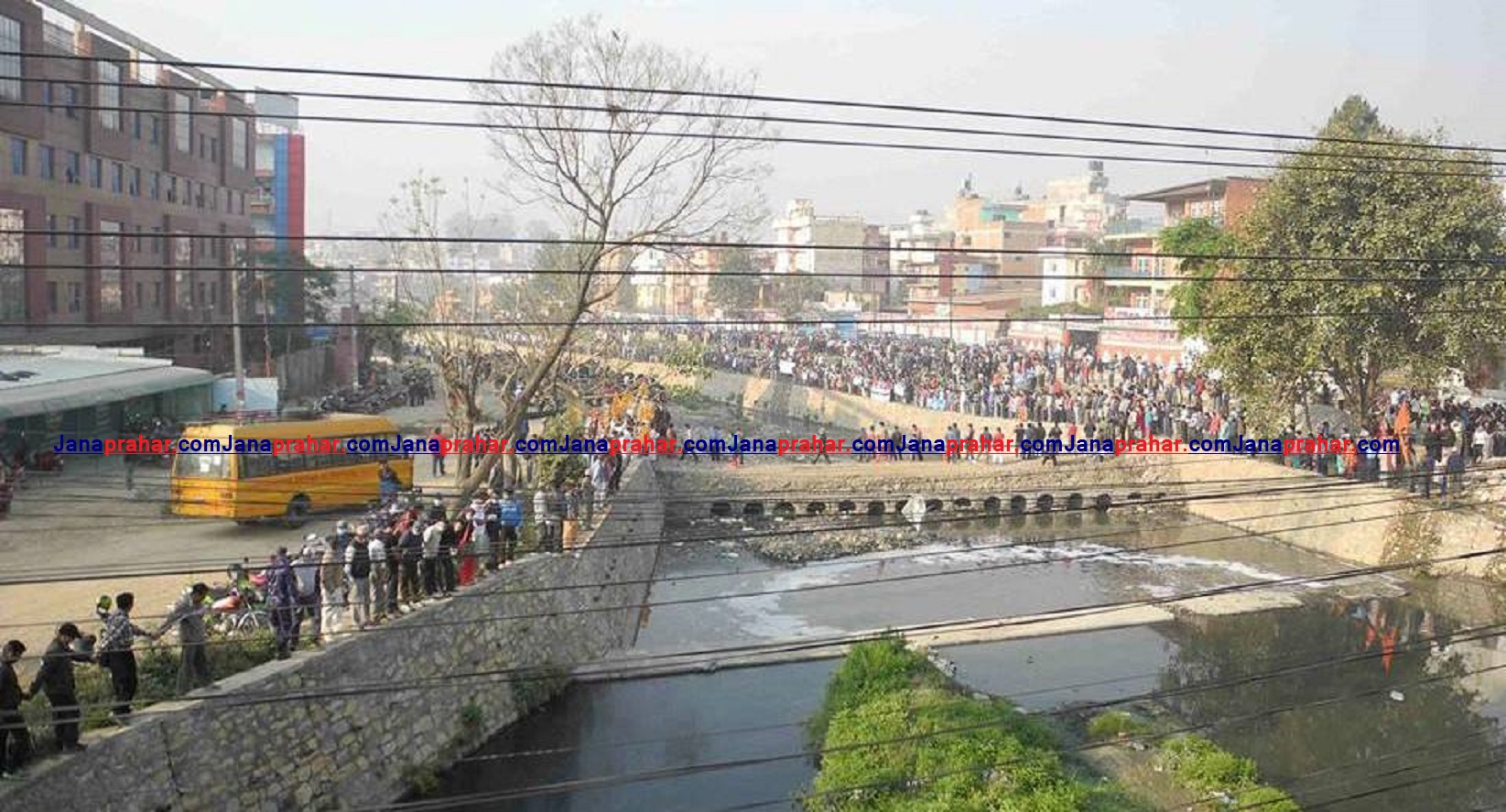
Kathmandu. In 28 years of its establishment, even one km of the river bank has not been made sewage-free due to the lack of authority of the government body, which is called the Wagmati Civilization Integrated Development Committee. The appointed executive chairman and project head have been complaining that the committee has not been given any authority even though it is written before the name.
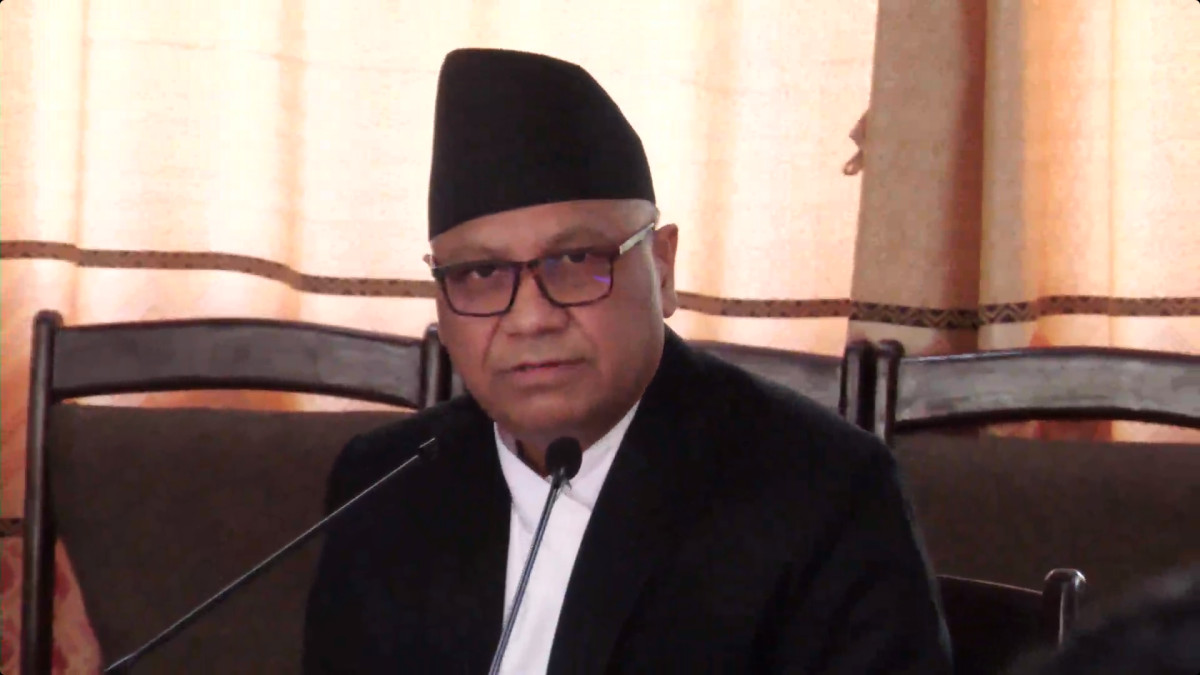
Former President and former member of the National Assembly. After Vidur Paudel said that he would not sit in that committee if he did not give authority, the authority was added before the name. Narendraraj Basnet, the former chairman of the committee, admitted that although the committee has completed 27 years of establishment and has entered 28 years, it has not been able to fulfill its responsibilities as it has to work according to the formation order.
After repeated requests from the committee officials to the Urban Development Minister and the Secretary, the Oratory Bill has been prepared. The bill was prepared under the leadership of the Ministry of Urban Development. “The name of the office is full of authority, but the authority has not even been given the right to bring any legal action to those who throw garbage in the river. Due to the delay in making the law of the committee, the work of moral development of the employees has also been affected”, he said.
Leela Prasad Dhakal, the former head of the project, has the experience of not being able to bring legal action against those who have encroached on the banks of the river in the name of Sukumvasi, due to lack of rights. It is the experience of the officials here that there is pressure from various power centers when trying to evict those who occupied the Bagmati shore.
“Wagmati will never be clean by piling sukumwasi on the river bank. A study to solve the real problem of sukumwasi should be implemented. There are many people who build a terrace on the river bank and rent it out in the name of sukumwasi”, he said.
According to the committee, the work of infrastructure development including the beautification of Bagmati and the construction of corridors is being hindered as the residents are occupying the river bank even in the housing built in Ichangunarayan. Although the committee has repeatedly promised to solve the problem of riverside residents within a few days, it has not been implemented.
The twenty-year Wagmati master plan is in its final stages
The Empowered Oratory Civilization Integrated Development Committee has completed the 20-year master plan for the improvement of Oratory, which flows as a source of civilization in the Kathmandu Valley, in the current financial year. Kamal Aryal, information officer of the committee, informed that a 20-year master plan is being brought for the purpose of cleaning the Wagmati and its tributaries.
In the master plan, an action plan is going to be made to return the river civilization to its original form. After finalizing the draft of the master plan, it has been prepared to submit it to the Council of Ministers for approval through the Ministry after receiving everyone’s suggestions in the first week of July.
According to the committee, in the master plan, it is going to be mentioned where to keep ponds, how wide to maintain the river, how to make the river system clean, clean and green. The consulting company prepared the master plan in collaboration with experts from various fields. It is said that the river civilization of Kathmandu valley is going to be improved by implementing the master plan.
Land problems in beautification
The Vagmati-affected farmers of Kageshwari Manohara and Gokarneshwar municipalities have repeatedly stopped the ongoing river beautification work in the Guhyeshwari-Gokarneshwar temple area. The process of restarting and stopping after some time after the agreement has been going on for the past five years.
The land of Kageshwari Manohara and Gothatar Bridge in Gokarneshwar municipality, which was registered in the name of farmers in the census of 2021, was transferred to Vagmati for the purpose of purifying water in 2053. Farmers have been holding various protest programs for 25 years after the land fell into the river even though they have red parts in hand. There were many protests against the beautification work on the same land without compensation to the farmers. Sometimes work is done and sometimes stopped due to protests.
The committee of affected local residents has previously demanded the implementation of the agreements made with the farmers in November 2053, 2066, 2067, 2074 and 2076. Balram Sharma Chounlagai, a farmer of Dahal, Pudasaini, Acharya, Rizal, Baral, Tamang and Shrestha Bandhu Samaj of both municipalities, became a victim. The commission formed in the years 2057, 2065, 2067 and 2074 has also submitted a report to the ministry that the farmers should be compensated. He complained that although the authorized Wagmati Committee published a notice in the Gorkhapatra daily on 12th November 2075, the process did not proceed.
Gokarneshwar in Wagmati, Kageshwari Manohara Municipality and Kathmandu Metropolitan City Ward no. According to the committee, 188 ropani land belongs to local residents of 6 and 7. The work of beautification of Bagmati, which is being done by the Empowered Bagmati Committee with the loan support of Asian Development Bank (ADB), has stopped because the problems of the victims have not been resolved. The land problem has become the main reason for the beautification work not being completed on time.
188 ropani lands of the local residents were transferred to the river when the river was constructed from Gokarneshwar to Guhyeshwari in Wagmati and a road was constructed on the bank. Local residents have been holding protest programs since 2055, demanding compensation.
Sundarijal-Pashupati’s Vagmati Dhalmukt scheme limited to Gaff
Officials of the empowered Wagmati Committee had expressed their commitment to free the Wagmati River from Sundarijal to Pashupati by the end of June last March. “Wagmati River Cleanliness, Civilization Protection and Promotional Program” organized by the committee in March
In the discussion program on ‘Relevance and Relevance’, it was informed that a five-member committee consisting of representative members of the concerned bodies has been formed to make suggestions regarding freeing the river from, the source of Wagmati, to Pashupati.
In the event, Committee Chairman Uddhav Prasad Timalsina mentioned that the manpower can be increased if not five people, and promised that the necessary budget will be arranged to free the river up to Pashupati area. But nothing remarkable has been done to free the sewage in four months.
Even a km of Bagmati could not be sewer free
Empowered Wagmati Committee has spent 14 billion rupees budget when entering 28 years after completing 27 years of its establishment. But the cleaning campaigners have been demanding a fair investigation saying that even one km area of the river has not been cleared of sewage.
The group, which has been cleaning rhetoric for two hours every Saturday morning as a volunteer campaign for nine years, submitted a demand letter to the empowered rhetoric committee and demanded an investigation. In the year 2052, Wagmati, which is the civilization of the capital city, was established with the authority to free sewage. The name of the committee changed several times. Dozens of presidents have changed, but not even one kilometer of the river has been cleared of sewage.
The campaigners have also demanded that the river structure of Kathmandu Valley, including Bagmati, Rudramati, Bishnumati, which should be developed traditionally, has been cut and made ugly by a big concrete wall. The campaigners demanded that the source of civilization be made like an uncivilized and ugly canal.
Campaigners protested that the committee, which had important responsibilities such as stopping the sewage mixed in the river and returning the encroached land, instead distributed the land along the river to various individuals and organizations without doing so.
The beautification of the river has been stalled for years due to encroachment of riverside land in the name of Sukumvasi. The campaigners also demand that the investigation of the incident in which land was distributed to individuals and organizations for commercial activities by the Maha Abhiyan should be investigated with the participation of citizens.
Allegations have been made in the demand letter that land has been allotted to commercial persons and organizations in Wagmati Manohara Dobhan, Rudramati Dobhan, Kupandol lower level of Lalitpur and Tankeshwar area of Bishnumati. Those individuals and institutions have built physical structures and locked them. Campaigner Gobind Kafle said that as this is irresponsible and reprehensible work as well as corrupt activities, he had to submit a demand letter and protest.
He said that the government agency, which was given the responsibility of rebuilding the land of Bagmati, instead gave it to a commercial group and attacked the essence of civilization. The Maha Abhiyan emphasized on fair investigation as the committee has no right to donate land to commercial persons and organizations like personal property. The committee has been adamant that the Maha Abhiyan has alerted people and commercial organizations on the banks of the river while they are building structures.
The nine-point memorandum has demanded an immediate stop to such irresponsible activities in rhetorical civilization. The campaign has strongly demanded that the existing structures be immediately demolished and the public lands along the river be protected and beautified. Expressing a humble request to correct the wrong activities through the memorandum, Mahabhiyan has warned that if there is no hearing, they should be forced to start any kind of protest against the officials concerned.
The campaign has also demanded to publicize the action plan to free the river structure of Kathmandu valley including Vagmati, Rudramati, Bishnumati. The campaigners also emphasize that the act of throwing garbage on the river banks should be stopped immediately. The Maha Abhiyan has also drawn the attention of the committee to separate the encroached land along the river bank according to the survey of 2022. The plan to beautify the public land along the river by creating gardens and greenery is coming to a standstill.
Chairman of the committee, Uddhav Prasad Timalsina, says that since he came, no person or organization has been given land along the river to build physical structures. He also told that the committee had published a public notice to demolish the structures built earlier. The committee has also prepared to demolish those structures if they fail.
Speech Cleansing campaign successful in spreading awareness
I keep my residence and surroundings, workplace and public places and rivers clean. I will work to maintain the cleanliness and sanctity of the Wagmati River.” With this slogan, the Wagmati Cleanup Campaign starts every Saturday morning with two hours on the banks of the Wagmati River and the cleaning campaign workers take the oath mentioned above. In this way, the cleaning has reached 478 weeks last Saturday.
At present, along with the tributaries of Wagmati in the capital, more than 106 places such as ring roads, heritage sites and outside the valley are being cleaned in the main cities, rivers and cultural sites. On 5th June 2070, the Bagmati Clean-up Campaign was started from Pashupati area under the leadership of the then Chief Secretary Leelamani Paudel.
So far, more than 20,000 metric tons of sewage has been removed from the river and managed. Kathmandu Metropolitan City and other local levels manage waste. According to the empowered Wagmati Committee, more than 20,000 metric tons of garbage has been managed based on the measurements taken during waste management.
One million volunteers have worked in the clean-up campaign. Wag As a result of the motivation of the Mati Clean-up Campaign, cleaning campaigns were conducted in Rudramati, Bishnumati, Ikshumati, Manohara, Hanumante, Kodku, Godavari, Balkhu Khola, Bagmati above Guhyeshwari, Tilganga, Alok Nagar, Sundarighat, West, North and South parts of Chakrapath and other authorized Bagmati committee members and board members. Regular cleaning campaigner Mala Kharel says. The source of inspiration for all these clean-up campaigns is the Wagmati Clean-up campaign.
Outside the valley, the cleaning campaign is being conducted in more than 106 places across the country, including Panauti, Janakpur, Siraha, Lahan, Jhapa, Pokhara, Butwal, Tinau, Dang. After the start of the campaign, all these places got the inspiration to start the cleaning campaign.
Mythology of Vagmati River
From Mrgendra Peak in Shivpuri Nagarjuna National Park, Vagmati, the source of civilization of the capital, is revealed. This place is now in the geographical boundary of Gokarneshwar municipality. It has been mentioned in various Puranas that after Nrisimha killed Hiranyakashipu, he came to this mountain and wandered around wearing the head of a deer like Indra (lion).
This place is called Vagdwar because of the origin of Vagmati. Here the devotee Prahlad performed penance for Lord Shiva for a thousand years. Shiva was very pleased with the penance and burst into laughter. Various Puranas mention the legend of the manifestation of eloquence when Lord Shiva uttered a spittle from his mouth. Vagmati is also known as Sivaganga and Brahmasaraswati because it originates from the mouth of Shiva.
Vagmati appeared from the north face of Shivpuri and Bishnumati from the south face. Rudramati (Dhobikhola) originates from the south east of this peak. Manimati (Manohara) has arisen from Manichud Parbat (Bajra Yogini’s hill). Also, Ikshumati (Tukucha), Hanumati (Hanumante), Bhadramati (Bhatekhusi) and Prabhavati (Nakhkhukhola) merge into Vagmati from various places in the valley. Writer and former secretary Vishnugopal Risal has mentioned the group of these seven rivers that merge into Vagmati in the book ‘Wagmati Kathmandu Diwaliko Muhan’, which is also called Saptamati.
Apart from this, Kotkukhola, Mahadevkhola, Balkhu Khola, Godavari Khola, Chandramati, Suryamati, Syalmati, Nagamati and many other small Tina rivers also join Vagmati directly or through tributaries. It is mentioned in the Varahapurana that Vagmati, which comes out of the arms of the Himalayas, is hundreds of times more holy than Bhagirathi (Ganga). The Pashupati Purana says:
Lingam Vagvatya Cha Sama river in Pashupati.
In Guhyeshwari, the Peetha was buried by the universe.
That is, there is no other person in the universe with the same sex as Pashupati, the same river as Vagmati, and the same back as Guhyeshwari. In Himavatkhand of Skanda Purana Nepal Mahatmya, it is mentioned that the Rudradhara Tirtha at Manohara Sangam (Dobhan) played a major role in increasing the importance of eloquence.
According to classical belief, Bishnumati’s sangam Teku Dobhan and Nakhkhukhola (prabhavati) sangam are also highly praised. Adinath is bathed on the day of Chaitra Shukla Ashtami at the confluence of Vagmati and Nakhkhu rivers.
A fair is held on Vaishakh Sankranti and Ganga Dussehra festivals at Hatyamochanghat in Jorpati of Gokarneshwar municipality where the Vagdwar, Surymati and Chandramati rivers meet. At that time bathing fairs were also held in places like Guhyeshwari, Pashupati, Shankhamul, Teku Dobhan, Nakhkhudobhan and Katuwaladah. During solar eclipse and lunar eclipse, there was a crowd of bathers on the banks of the river. This culture has gradually reached a state of extinction after the eloquence became polluted.
According to Nepal Mahatmya, there is a tradition of going on pilgrimage to Vagmati. This pilgrimage starts from Katuwaladah. After spending a month, visit the shrines of Setubandha, Vasuki, Durga, Vyaghra, Prabhavati and Vagmati Dobhan’s Pramod Tirtha in Balkhu Dobhan, Panchanadi Tirtha in Teku Dobhan, Kalmochan Tirtha in Tukucha Dobhan, Sahodar Tirtha in Rudramati Dobhan, Rudradhara Tirtha in Manohara Dobhan Shankhamool and Brahmasaraswati Tirtha in Bagdwar. Bathing tradition could not be done because the river was polluted for a long time.