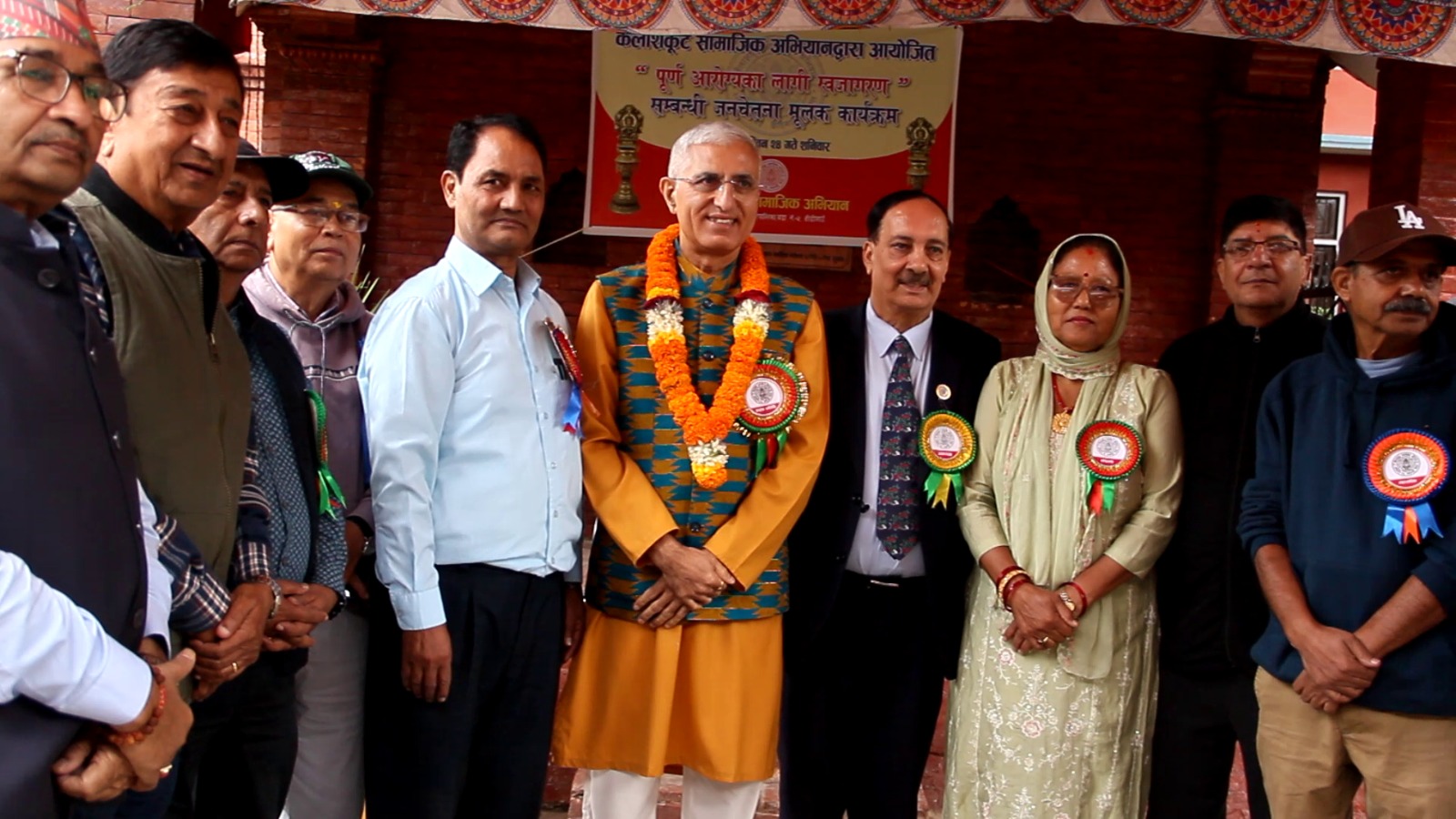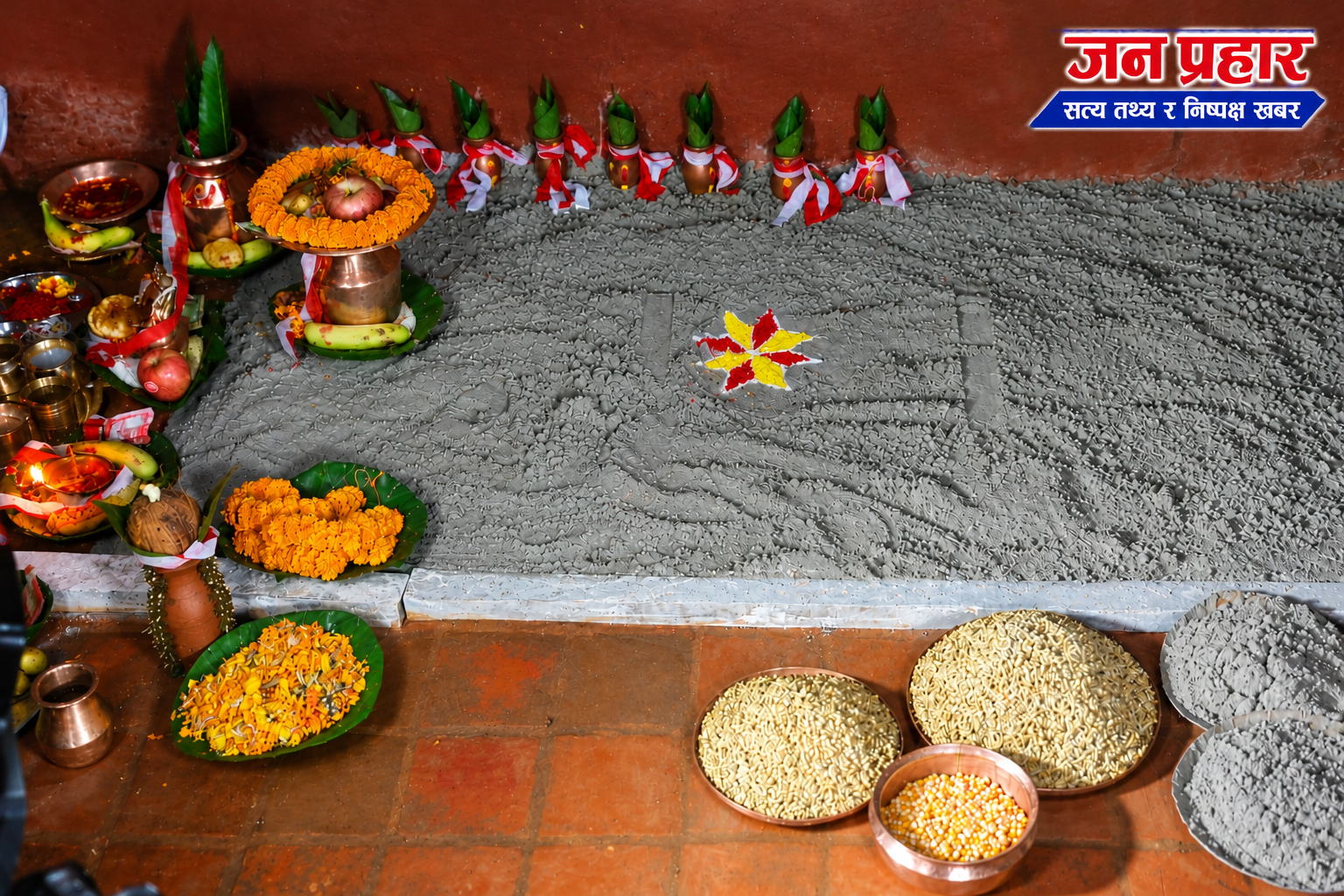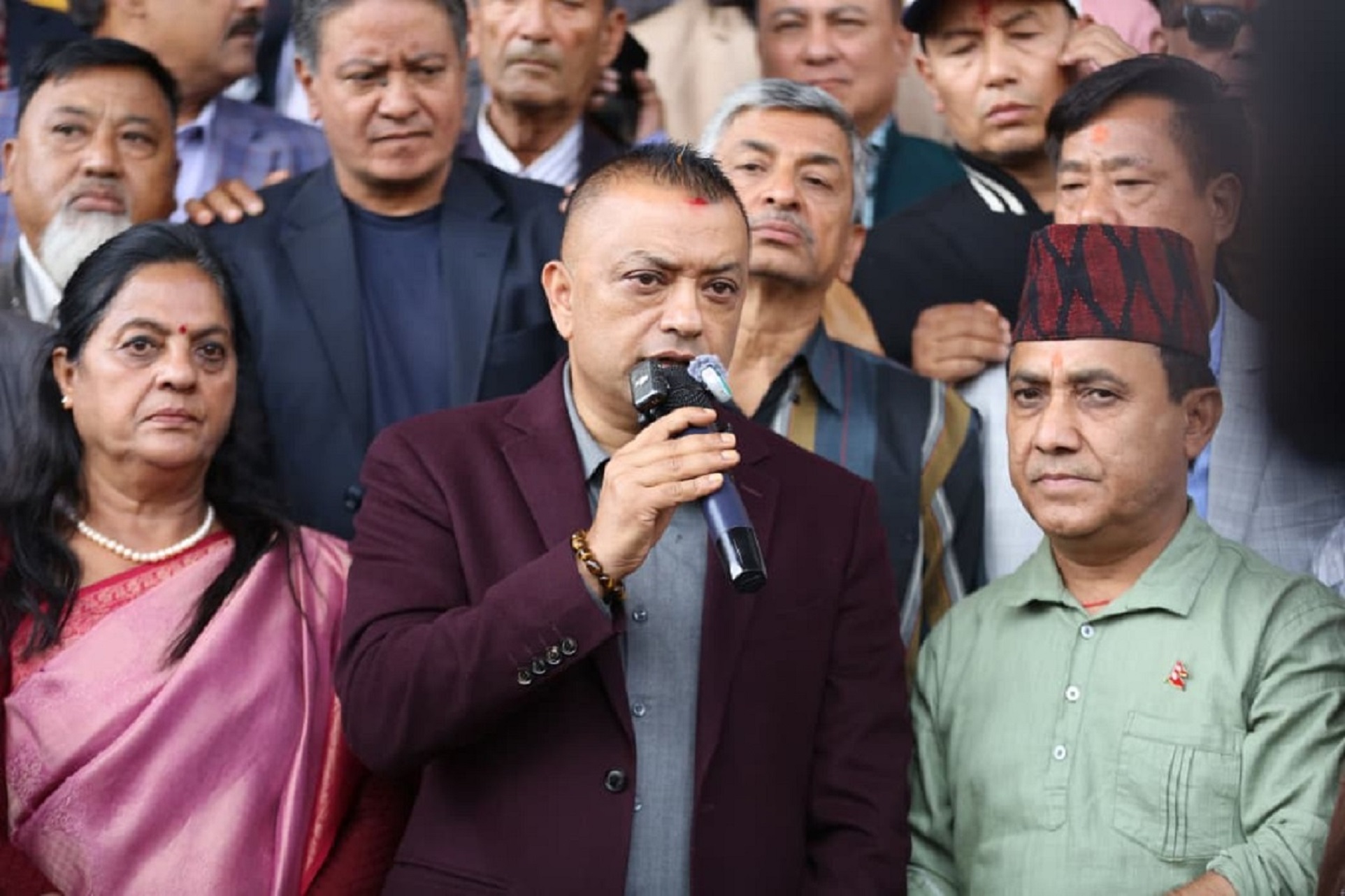
Kathmandu. The foundation stone of Hanumandhoka-Swayambhu heritage road is being laid. The foundation stone of the heritage road has been laid near Moru Ganesh Sthan.
Both Hanumandhoka and Swayambhu are listed in the World Heritage List. Along with the construction of a 2 km road connecting these two, there is also a plan to construct and reconstruct flat and original houses in the road area. Culture, Tourism and Civil Aviation Minister Jeevan Ram Shrestha made the first decision to work on the construction of the Hanumandhoka-Swayambhu Heritage Road.
The discussion is limited to the heritage route
The Minister of Culture, Tourism and Civil Aviation Jeevan Ram Shrestha made the first decision upon taking office on Sunday, ‘to proceed with the construction of the Hanuman Dhoka-Swayambhu heritage road.’ The plan to promote tourism in the local area by building this heritage road is not new. They have been demanding to build a heritage route to connect and increase tourism activities in the local area.
However, although such issues are included in various programs, policies and plans of the Kathmandu Metropolitan City, the provincial government and the federal government, work has not started according to the integrated master plan. According to the master plan prepared by the Kathmandu Metropolitan City two years ago, the Hanumandhoka-Swayambhu Sampadamarg footpath will be 2.2 kilometers long. About 2 dozen important heritage sites can be observed on this route.
Kasthamandap, Maru Ganesh, Maru Hiti, Santhaneshwar Mahadev, Maruvahi, Michya: Galli, Banja: Hiti, Saah (Oil Mill), Chaswandwan, Damai Tol, Sunta Galli, Pachai Galli, Naradevi Dyahchhe via Naradevi Ayurvedic Hospital and Community (Lokeshwar) Galli. A heritage route was proposed to increase. It was said to reach Swayambhu via Burankhel, Myechyon Hiti, Tapyantan, Ranjit Malla Sat Ghat, Velu Mahadev, Dallu Chautara, Nipu Hiti (Bhimsen Temple), Dhime Lvahan, Chara Hiti, Bhuyankhel.
There was also a plan to put up introductory boards so that heritages can be recognized, to transform new style local buildings into traditional forms, to create exhibition spaces that reflect the local lifestyle, and to restore the original form by preserving the pati, pauwa and sattal on the footpath. No one came forward to work according to the master plan. The scheme was further affected when different agencies ran their own piecemeal schemes.
Not only Hanumandhoka and Swayambhu, but also the plans of the footpath connecting the tourist area Thamel with heritage areas such as Handigaon, Pashupati have not yet progressed. Even the plans that have gone ahead have become ineffective due to not being implemented properly. According to the plan to connect the properties along the Wagmati coast by footpath, the project which is already in the construction stage is stalled. There has been no promotion to make use of the heritage footpaths built in this area, and the government is indifferent to the management of the three.
The plan to connect the heritage sites of Kathmandu through footpaths and cycle lanes to give tourists a lively Kathmandu experience has not risen above the discussion. Heritage lovers are happy when the new Tourism Minister Shrestha made his first decision about ‘Sampada Marg’, but they are not convinced that the current trend of the government will work. “It is a happy thing to build a heritage trail, but there is no doubt whether this trail will be built or not,” says Ganapatilal Shrestha, a heritage lover.
The multi-crore plan has not yet been completed
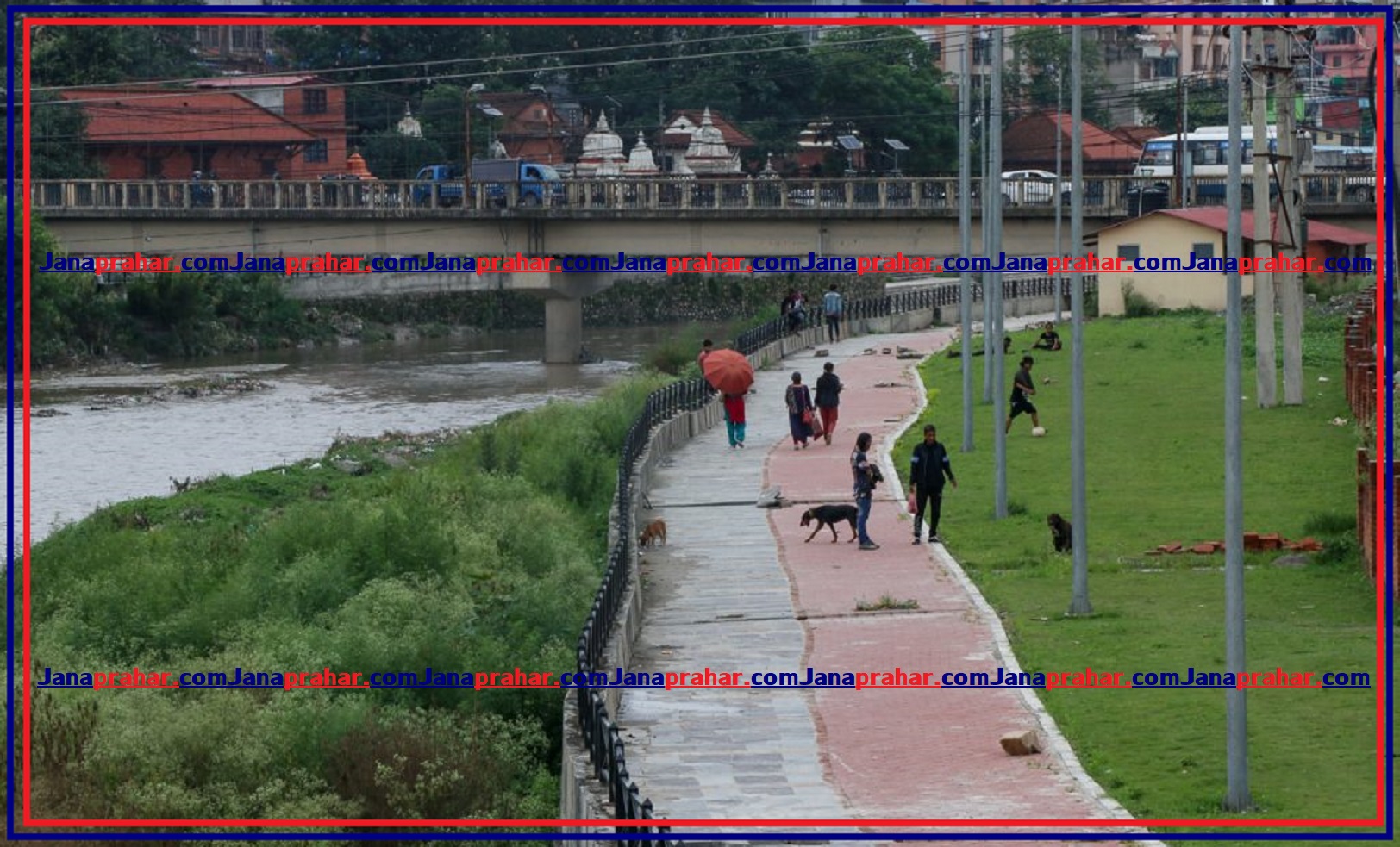
It is the working style of the heritage road that is being built on the banks of Bagmati that has made the activists of heritage protection aware and suspicious. The construction of the heritage road started in 2072 with the help of the Asian Development Bank is still under construction. However, the roads that have been built in places have become dilapidated and disorganized. According to the empowered Bagmati Civilization Integrated Development Committee, 70 percent of the work on the Bagmati heritage trail has been completed. On the two banks of the Bagmati river in Lalitpur and Kathmandu metropolis, with the help of the Asian Development Bank, the Bagmati Civilization Development Committee is working on the construction of footpaths and flats.
28 historical temples will also be reconstructed along the 14.2 km long trail. Out of the temples being built in 3 packages, only 11 have been built so far, Information Officer of Bagmati Civilization Development Committee, Engineer Kamal Aryal informed. The budget is being spent at the rate of 35 crores per package in 3 packages for 28 flats. According to Aryal, 1 billion 50 million rupees are being spent for footpaths in Bagmati Corridor in Kathmandu Metropolitan City and Lalitpur Metropolitan City.
Work is being done according to the plan to build seven disabled-friendly toilets, two-meter footpaths, and two-meter wide bicycle lanes on the footpath. Aryal said that there are also plans to print stones, make gardens, and put up lights. He said that the flats/temples being built in the river corridor will be handed over to the Metropolitan Corporation within the month of July. But the work could not be started because the temple of Brihaspati Baba in the corridor above the Thapathali bridge towards Kathmandu was not removed.
Kathmandu Metropolitan City and Lalitpur Metropolitan City have helped in coordination in the project, which has received technical support from the Archeology Department. However, this road which has been in discussion has not yet been completed and is not usable. Damodar Gautam, director general of the archeology department, says that the department has no role in the current work. “There are many heritages of great archaeological importance on this footpath, which remain under our protection,” he said, “we have done the design work of the infrastructures being built on the banks of the Bagmati River, we have not looked at other works.”
Saying that the work of the Bagmati Heritage Road should be completed quickly, he said that there will be many benefits in the future if the important plan to connect the heritages of the inner city through footpaths can also be carried forward. “The decision to build the Swayambhu-Hanumandho footpath is important in terms of cultural tourism, we welcome it as a unit to implement it,” he said, “other agencies of the state should also play a role to complete it.”
According to him, now the main routes and auxiliary routes will be searched after studying. According to Director General Gautam, the work will be started by finding the Deval, Hiti, Chok, Peti while protecting the properties between Kasthamandap and Swamyambhu. “Our department will pay special attention to the antiquities of this route, the rest of the infrastructure such as toilets and cycle lanes should be looked after by other agencies of the state,” he said.
Hopeful, but apprehensive
Heritage conservation activists say that the two World Heritage sites should be connected through a ‘no vehicle zone’ so that tourists can go back and forth. According to Shrestha, a heritage conservation activist, there is a demand to build a road from Hanuman Dhoka to Swayambhu via Marun-Dhokatol-Nardevi’s street. Inner streets can also be connected to this route. The streets and squares here are ancient. Tourists should be able to feel this and walk,” he adds, “now tourists who came to Hanumandhoka, Basantpur should go to Swayambhu by car, we should be able to show them our inner city and take them to Swayambhu and bring them back from there.
He says that tourists will stay for a long time only after the construction of this footpath. He argues that it will also help to promote the interior heritage and increase the business there. Other paths can be created creatively by further studying the inner settlements of Kathmandu. There is a lot of possibility that tourists can be guided around the inner city by keeping heritage police, Shrestha added. He said that Minister Shrestha’s involvement in Swayambhu was contrary to the purpose of heritage protection in the past, and he said, “The minister may have decided on the heritage route not for discussion but for work. Let’s see how it works.”